
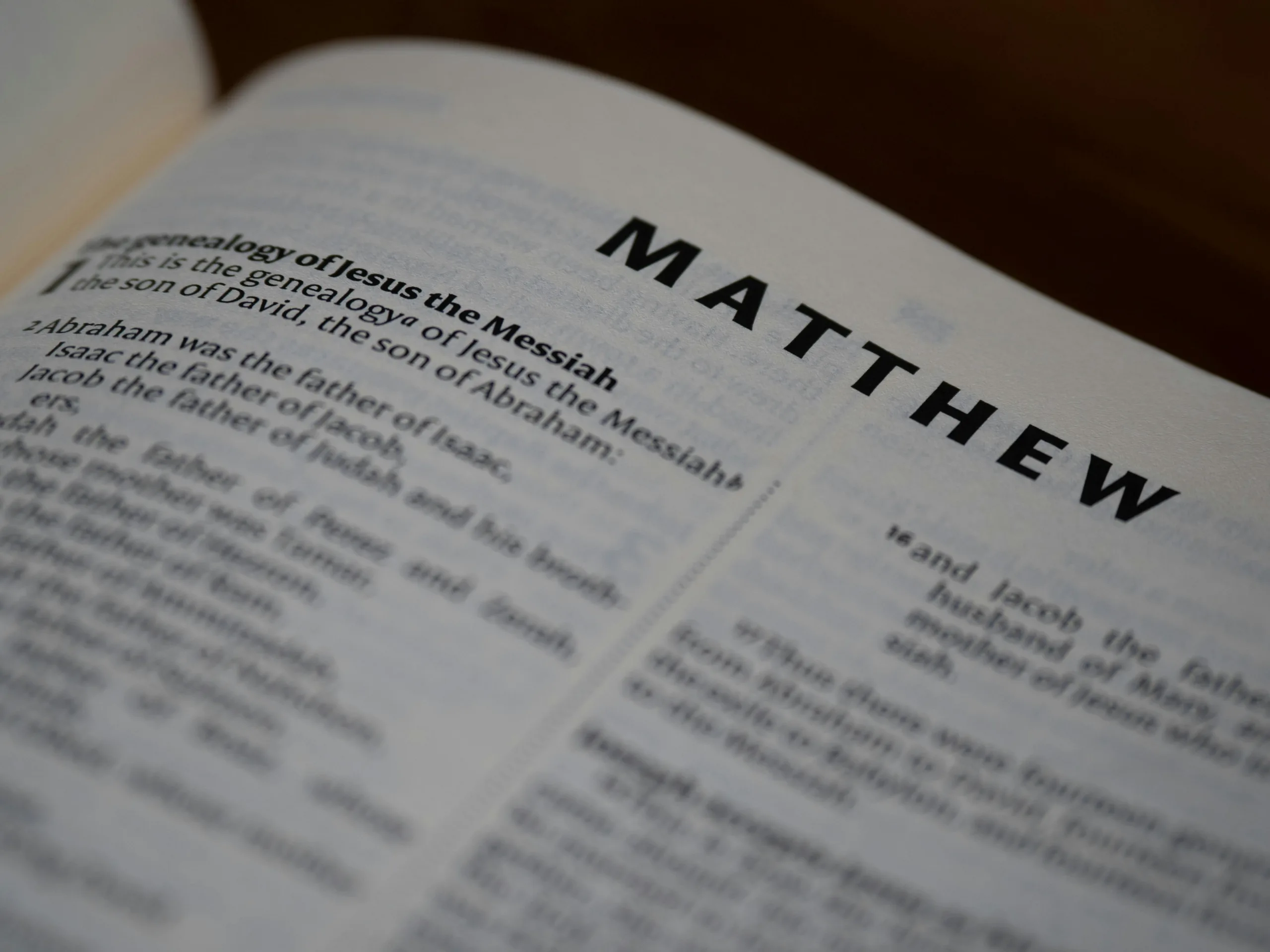
The Genealogy That Preaches: What Matthew 1:1–17 Teaches Us About God’s Faithfulness and Christ’s Mercy
When most people open the New Testament, they expect fireworks: angels, shepherds, wise men, the whole Christmas pageant. Instead, Matthew begins with a genealogy. Sixteen verses of names. To the modern reader, it can feel like starting a race by tripping over a family reunion. But the Holy Spirit wastes no ink, and this opening is far more than a historical footnote. Following the steady, pastoral wisdom of J.C. Ryle, we find in Matthew’s genealogy a treasury of truth for the believer’s heart.
1. A Passage That Should Make Us Slow Down
Matthew opens with a reminder that the book we hold is not merely literature; it is the very Word of God. “All Scripture is breathed out by God” (2 Tim. 3:16), and that includes long lists of names that we may be tempted to skim. Ryle observed that the poorest Christian armed with Scripture knows more of true religion than the greatest philosophers of Greece and Rome. Why? Because Scripture is not merely information, it is revelation.
This calls us to read the Bible with reverence, diligence, and prayer. Eternal life rests on the way we receive this Book. And as Matthew opens the curtain on the life of Christ, we are reminded again: we can never hear too much about Jesus Christ. Everything, life, peace, hope, eternity, stands or falls with Him.
2. A Genealogy That Proves God Keeps His Word
Some may wonder why Matthew begins with Abraham and David. The answer is simple: God made promises. He promised Abraham that in his seed all the nations of the earth would be blessed (Gen. 12:3). He promised David that a King from his line would sit on the throne forever (Isa. 11:1).
This genealogy is not filler; it is a record of divine faithfulness. Every generation listed, through the triumphs, failures, wars, exiles, and restorations, moves like a steady drumbeat toward the coming of Christ. The message is unmistakable: God keeps His word.
For the unbeliever, this is sobering. If God keeps His promises of blessing, He will also keep His warnings. The Judge of all the earth will do right.
For the believer, this is glorious comfort. Your Father in heaven does not forget a single promise. Not one. He will finish the work He began (Phil. 1:6), sustain the weary, forgive the repentant, and keep His people unto the end. As Ryle reminded us, He remains faithful. He cannot deny Himself (2 Tim. 2:13).
3. A Genealogy That Exposes the Human Heart
If Matthew were trying to impress us with a flawless family tree, he did a rather poor job. This list is filled with men who made a mess of things: Rehoboam, Joram, Amon, Jeconiah, sons of godly fathers who ran headlong into sin.
Ryle reminds us here of a humbling truth: grace does not run in families. You can inherit your father’s chin, your mother’s eyes, and your grandfather’s stubbornness, but you cannot inherit regeneration. Only the Spirit can give a new heart (John 1:13).
This is both humbling and motivating.
For parents: pray earnestly for your children. Good examples and good teaching matter, and they matter deeply, but only God can give life.
For all of us, let this list serve as a reminder that the heart must be changed from within. External religion is not enough. Only the new birth produces true faith.
4. A Genealogy That Displays the Mercy of Christ
This is where the genealogy becomes astonishing. Among these names are Tamar, Rahab, Ruth, and Bathsheba, stories filled with scandal, sorrow, and human frailty. Others listed are so obscure that we know nothing about them at all.
And yet, the line ends with Jesus Christ, “who, though he was rich, yet for your sake he became poor” (2 Cor. 8:9).
Think of this: the eternal Son took on flesh from a humanity stained with sin, entering a lineage full of brokenness, failures, and painful memories. He was not ashamed to be associated with sinners. And He is not ashamed to receive sinners now.
Ryle puts it beautifully: if Jesus was not ashamed of this family tree, He will not be ashamed to call repentant sinners His brethren. Our past may be as dark as any name on this list, but no darkness is beyond the reach of His redeeming compassion.
5. What This Genealogy Means for Us at Radiant Hope
For those seeking counsel, encouragement, or a fresh reminder of gospel truth, Matthew’s genealogy preaches several needed comforts:
- God has not forgotten you. His purposes often unfold slowly, but they unfold surely.
- Your family history does not determine your spiritual future. Christ breaks cycles of sin, shame, and despair.
- Your past does not disqualify you from Christ’s mercy. He came precisely for people who need grace.
- God faithfully carries out His promises in the middle of ordinary days. Even in long stretches of waiting or hardship, His hand is steady.
And perhaps most importantly:
Christ enters broken stories to redeem them.
That is the message of Matthew 1. That is the message of the whole Bible. And that is the message we gladly proclaim at Radiant Hope.
So yes, Matthew starts with a genealogy. But as it turns out, this list of names preaches the gospel before Jesus even speaks a word.